


Building a two storey home? Here’s the low down on cost.
- Finance

The short version
- A two storey home usually costs a bit more than the same rooms on one level. The stairs, the stairwell and the scaffolding are the extras.
- You claw some of that back with a smaller slab, a smaller roof and, if you like, a smaller block.
- Size is the biggest lever. The ABS puts the average new house in NSW at 239.4 square metres.
- First home buyers in NSW pay no transfer duty on a home up to $800,000, with a concession up to $1 million, according to Revenue NSW.
- Site costs, finishes and location move the price more than the number of storeys does.
Building a two storey house can be a smart decision. You maximise use of your available land space and will have a home that allows you to easily separate living areas from sleeping zones.
Costing a two storey house involves elements that simply don’t exist for single storey homes. Inside the home, there’s the additional space required for a staircase, as well as the actual stairs themselves. Outside the home, you similarly have more materials used. Plus, during the build, construction will be happening up high, requiring additional safety measures and equipment.
Let’s look in detail at the costs of building a two storey home.
Factors that impact build price no matter how many storeys
The cost of building a home is a little like the question: ‘How long is a piece of string?’ Of course, there are factors that will raise or lower the price of a new home build no matter whether it’s single, double or even triple storey:
Size: It makes total sense that a larger home will cost more to build than a smaller one. That equation includes all elements, from the number of bedrooms through to the size of the living spaces and bathrooms. After all, bigger means more so a larger home will simply require more materials and more work days for the build. For a sense of scale, the ABS puts the average new house in NSW at 239.4 square metres, a touch above the national average of 232.3, in its Average floor area of new residential dwellings article.
Choices: If you choose the most expensive, premium tiles, your home will cost more than if you’re happy with a good quality yet functional option. If you can’t live without high-end marble for your benchtops, the final price will reflect this choice. This same principle applies for choices of all internal and external materials as well as appliances, fixtures, finishes and fittings.
Land: If your block of land is flat and has good accessibility, you’ll save on site preparation costs. Highly sloped or unusually shaped blocks, perhaps with challenging access, can mean more expense all the way from the planning stages and throughout the build.
Unique costs for double storey homes
While the above costs apply no matter whether your home is single or double storied, there are elements to construction that are specific to a two storey home. Some of these are advantageous to double storey home builders and others add to the overall price.
Staircase: The cost of the actual staircase is an element of a double storey home that simply doesn’t apply to one level homes. Staircases vary in construction materials, methods and finishes, however most double storey homes will attract an additional few thousand dollars for the steps that take you from the ground floor to the upper storey.
Stairwell: Those stairs probably won’t run from the middle of your lounge room right into a bedroom, will they?! No, they’ll be situated in a stairwell, which is a fancy term for the space around the stairs. In addition to housing the steps, a stairwell needs plaster and paint so adds to the overall cost of the home.
External materials: If you have the same number of bedrooms, bathrooms and living spaces, it’s likely that the cost of external building materials will be similar no matter whether those rooms are stretched out at ground level or whether they’re stacked on top of each other. One plus is that your two storey house will have fewer square metres of both foundations and roofing.
Construction costs: Working at height means that construction costs will be higher. Everyone wants their builders to be safe during the build of their home so understand that construction equipment like scaffolding will add to the overall costs of building a two storey home.

Other cost factors to keep in mind about two storey homes
Land size: By choosing a two storey home, you’ll be building up rather than out! If you’re not keen on a substantial outdoor area, you may be able to choose a smaller block of land, therefore reducing your overall costs.
Landscaping: If your double storey home is built on a block that leaves you with more garden space than if you’d chosen a single storey house with the same number of bedroom and living spaces, you’ll need to factor in higher landscaping costs.
Heating and cooling: Heat works differently in a two storey house than a single-level equivalent. You might find that your downstairs area stays cooler in summer, saving you air conditioning costs in your living rooms. However, your upper storey may be hotter and need more cooling especially on hot nights. Having the open stairwell area can increase your heating and cooling energy costs, especially in an open-plan home, as this is an area that’s spacious and hard to close off.
Other construction cost factors
There are so many other cost-affecting factors involved in house construction. There’s site preparation costs, which can vary hugely depending on the slope of a block or the presence of trees, the rockiness of the land and the existing infrastructure like water and sewage mains.
There’s the cost of building permits and other local council requirements.
Then there’s the quality of materials used, including everything from the foundation's concrete to the choice of tapware.
Construction costs for all types of homes also vary according to your chosen location. For example, how much does it cost to build a home in Sydney? That guide has current per square metre ranges for the city. If you want the official statewide number, the ABS publishes the average cost of new houses by state in its Building Activity, Australia release. Either way, the same house will cost a different amount depending on where you build it, so get a price on your actual block.
The good news? If you’re a first home buyer in NSW, there’s real money on the table. Under the First Home Buyers Assistance Scheme, according to Revenue NSW, you pay no transfer duty on a home up to $800,000, with a concession on homes up to $1 million, and vacant land is exempt up to $350,000. The First Home Owner Grant adds $10,000 towards a new home valued up to $750,000.
And the best news? Trustworthy and experienced builders are experts at taking all these factors into account before presenting you with well-priced, value-for-money homes.
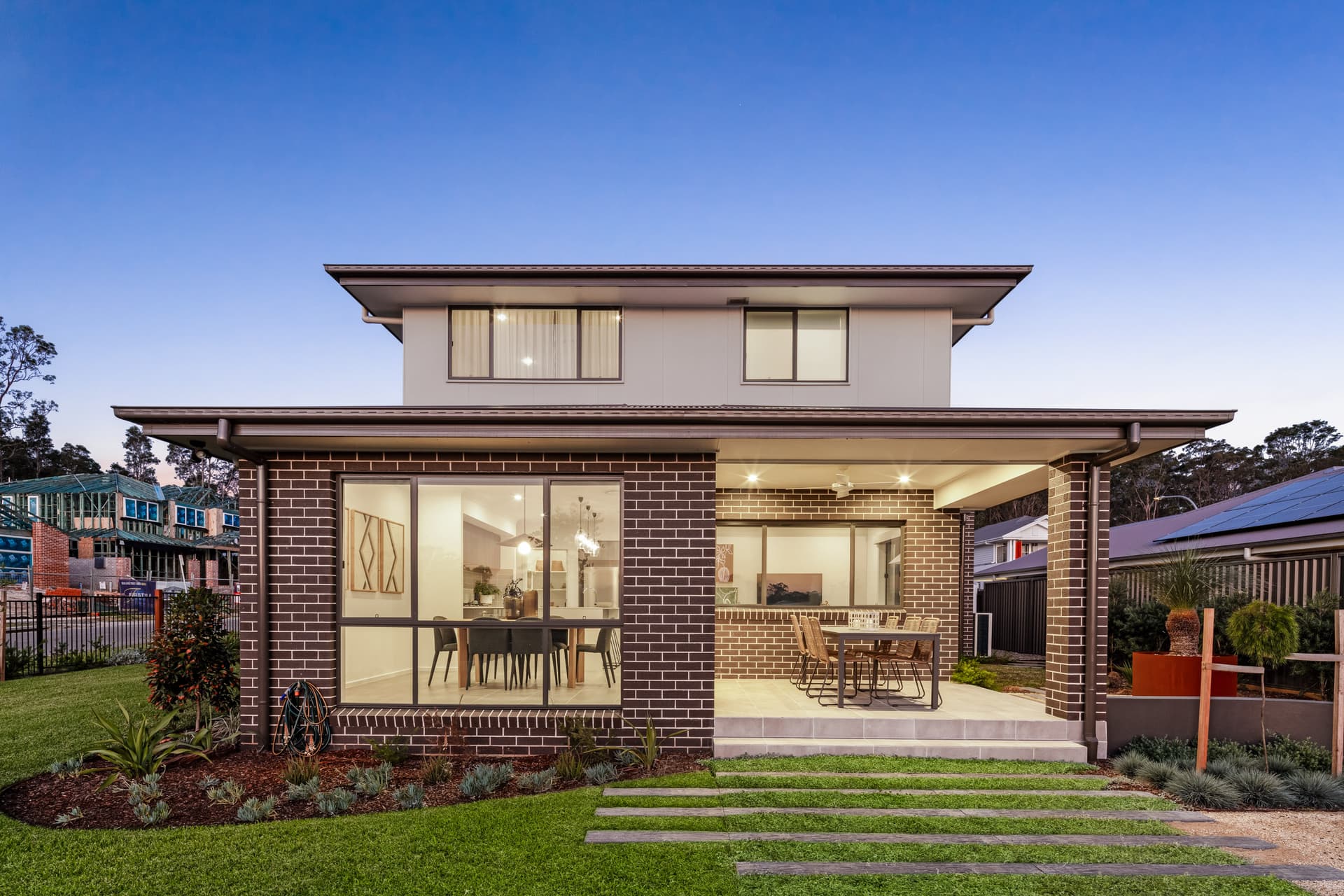
A summary overview of costs for building double storey houses
The cost of building a new home varies hugely according to factors such as:
- Size of house
- Number of rooms
- Interior and exterior design
- ‘Hidden costs’ like site preparation
- Selected construction materials
- Finishes, fixtures and fittings
- The location of your build.
Double storey homes can cost more than homes built all on the one level, due to the materials and labour to construct both the staircase and the stairwell, as well as construction requirements like scaffolding.
However, while it’s safe to say that, on average, it costs slightly more to build a two storey house than an equivalent single storey home, this is not enough to be a deciding factor in whether you consider two storey home designs, if this option is right for your land, your lifestyle or your family.
Need mortgage advice? Book an appointment with our finance partner at Mortgage Advice Bureau.
Is a two storey house right for you?
Double storey homes have so many advantages!
By building a two storey house, you maximise indoor space while still having land for outdoor areas. It’s easy to separate sleeping areas from living zones, many floorplans offer one downstairs bedroom that’s ideal for guests, and you have more options for privacy, both within the home and from neighbours.
Two storey homes allow you to capitalise on natural light and achieve great views from windows and balconies.
If you’re still undecided about whether single or double storey living is best for you, please check out our detailed overview about the pros and cons of one and two storey homes.
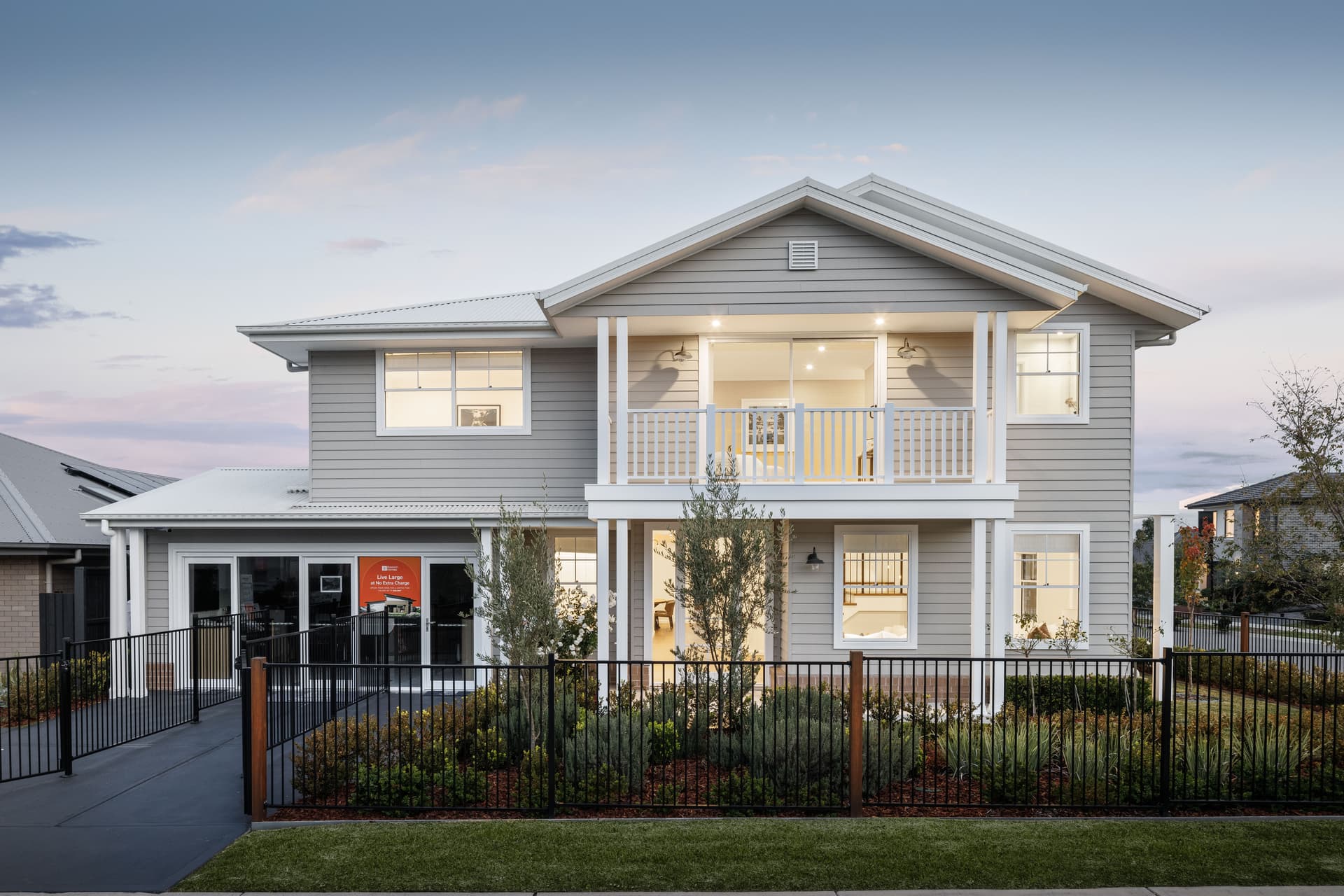
Choosing your ideal double storey home
At Rawson Homes, we have a huge range of stylish and functional two storey homes, ranging from a three-bedroom house to a six-bedroom, four-bathroom option. Whichever double storey home design suits your family’s needs, we’ll have a façade to suit your style, ranging from contemporary, modern, coastal, to Hamptons in a range of colour schemes.
Either way, we’re here to help you consider and choose your ideal design so that you’ll love coming home every single day. Contact us for help in choosing the ideal home for you.


