


Working from home? Here’s how to design the perfect home office
- Design Inspiration

The short version
- 36 per cent of employed Australians usually worked from home in August 2025, according to the ABS. A study or study nook is a normal part of a new floorplan now.
- A whole room is ideal, but a zoned corner, landing or under-stairs nook works with a screen and some built-in storage.
- Lighting and colour are the two decor decisions that matter most. Avoid glare on the screen and skip the bright red feature wall.
- Choose the desk and chair to suit your job and the size of the space. Leave at least a metre in front of the desk for the chair.
- WHS laws still apply when you work from home, so set the chair, screen and keyboard up properly. There’s a checklist below.
Not long ago, a home office in a new house was an afterthought.
Now it’s just part of the plan. According to the ABS, Working arrangements, August 2025, 36 per cent of employed people usually worked from home. That’s down a little from 40 per cent in 2021, but it’s settled at more than one in three, which is why the humble study nook has moved up the ranks to become one of the most important rooms in the house.
For some, remote working is an opportunity to cut their commute and improve their work/life balance. Others say flexible work improves their productivity and efficiency. Whatever your reason for working from home, it’s important to make sure your home office design is functional, stylish and sets you up for success.
Planning your home office design
It’s essential to take time to plan when designing your office space.
If you are able to dedicate an entire room to working from home, you’ll have plenty of scope for bringing all your home office ideas to life. You might choose to include some more relaxed seating for work that requires more contemplation than computer use. Including a day bed or single bed might allow you to multi-task your room as a guest room on occasion.
If you don’t have the luxury of dedicating an entire room to your home office, consider a disused corner of a room or a landing that could be zoned off and function as a workspace. You might be surprised by what you can create with a well-placed screen or some built-in storage.
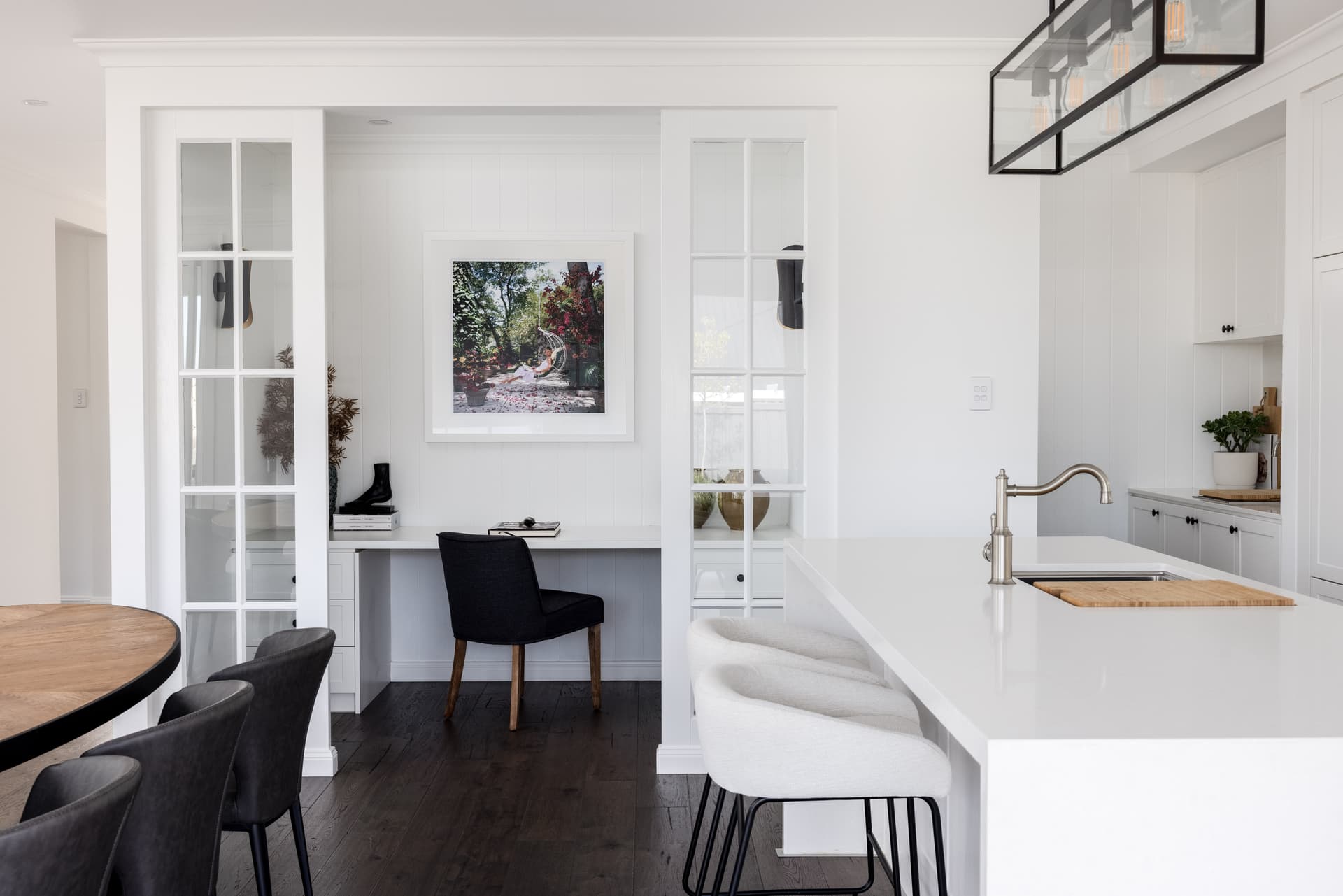
Our team are experts in small home office design, so if you’re not sure whether that space under the stairs will work for you, get in touch to talk through your ideas.
Check out design websites for home office ideas and inspiration, and make sure you factor in functional elements such as an ergonomic desk and chair, computers and other technical equipment.
Sketch out what you have in mind and include measurements of the space. Armed with a budget and a plan, you’re now ready to visit showrooms.
Designing your home office decor
There are two important factors to consider when decorating your home office – lighting and colour scheme.
While a good natural light source is ideal, it’s important to factor in where the sun will be at different times of the day and design your lighting strategy accordingly to prevent eye strain. In most cases, an adjustable overhead light is sufficient during the day; however, a small lamp may give more specific, directional light in the evening. Make it an LED one. YourHome, Lighting puts LED energy use at around 80 per cent less than halogen, and a desk lamp is on for a lot of hours.
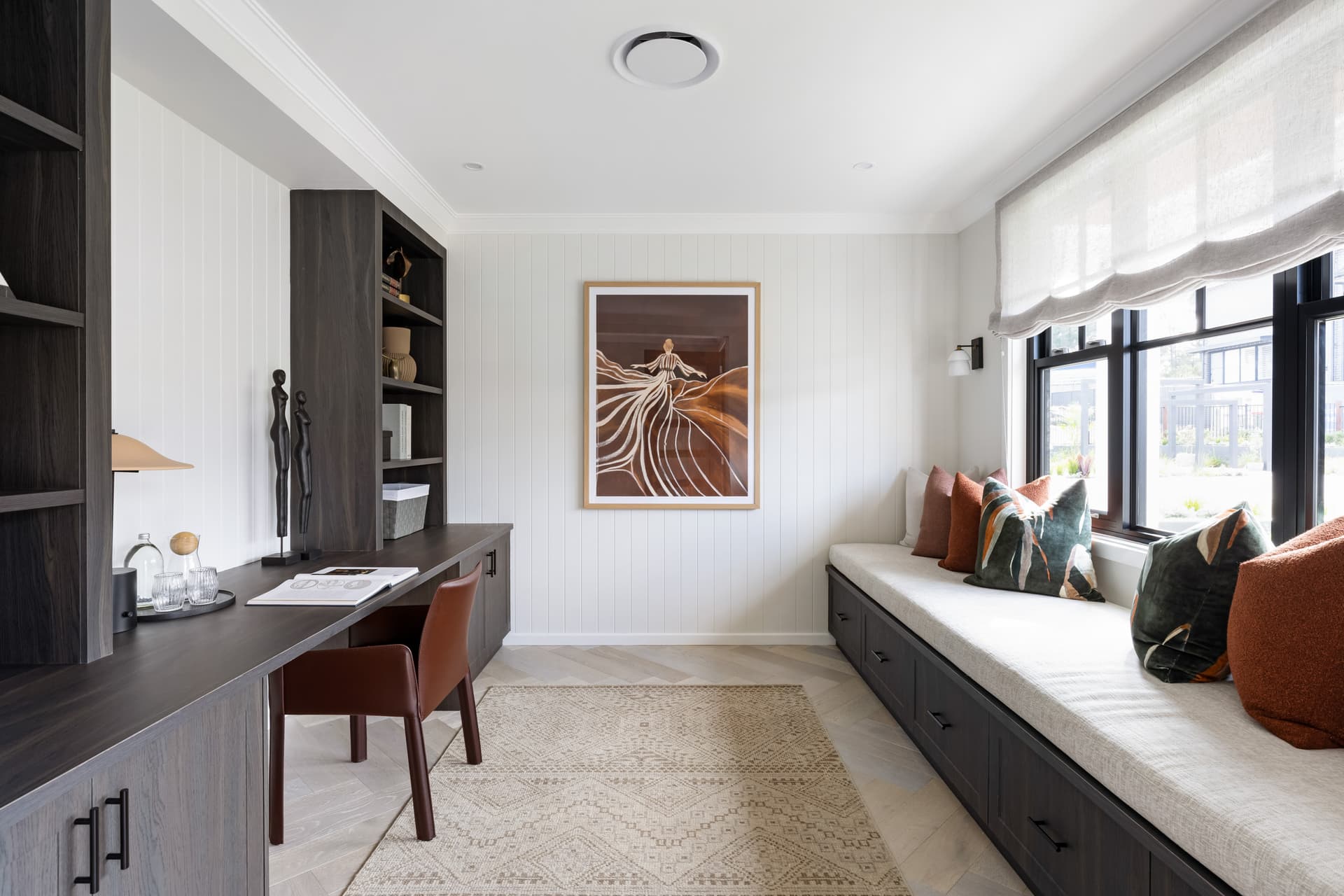
When it comes to choosing a colour for your home office, keep in mind that different hues can impact your mood, productivity, comfort and energy levels. For instance, a bright red feature wall might sound great in theory but could prove distracting if you’re forced to spend all day staring at it.
You will also need to factor in how the decor ties in with the rest of your home, particularly if your work space is only partially secluded from the main living areas.
In the end, colour is a personal choice. Pick something you’re happy to look at for eight hours, and if the office opens onto the living area, a slightly different shade on the study wall is an easy way to mark where work stops and home starts.
Choosing your home office furniture
It can be tempting to shop for your home office furniture on looks alone, but it’s important to make your selections based on the requirements of your job and the dimensions of the space.
When choosing a desk, consider how much storage you’ll need and look for features such as a keyboard drawer to keep clutter and wires to a minimum. Corner desks are a great option if you’re short on space, just make sure it isn’t too deep. A good rule of thumb is to allow at least one metre of space in front of the desk so you can sit in your chair in comfort.
If you’ll be working from home for a considerable number of hours, the ergonomics of your desk and chair set up are extra important. Using a second screen and an external keyboard can make a big difference to your productivity and health.
Safe Work Australia, Working from home is clear that work health and safety laws still apply when you’re working from home. A quick checklist before you call the study finished:
- An adjustable chair, with your feet flat on the floor (or a footrest) and your thighs level.
- The top of the screen at about eye level and roughly an arm’s length away. A laptop on a stand with a separate keyboard gets you there.
- Keyboard and mouse close enough that your elbows sit by your sides at about a right angle.
- The desk positioned so windows and lights don’t reflect off the screen.
- Room to get up and move during the day.

Other nice-to-haves
While work is your main priority when considering home office ideas, don’t forget about optional extras that can bring comfort, style and joy into your working from home office space.
Prints and rugs can add a splash of colour. Plants can bring some much-needed greenery and calm into your working day. Warm lighting can help reduce some of the eye-strain that comes from working on a screen.
Keen on more ideas and advice on how to include office space into your new home? Please either check out our home designs, visit one of our display homes or call 1300 223 345 to chat with one of our expert consultants.


