


Front and Centre: Choosing the right façade for your single storey home
- Home Designs
- Design Inspiration

The short version
- A façade is the whole front of the house: walls, roof line, windows, doors, materials and colour working together.
- The two big camps are modern/contemporary (clean lines, box shapes, greys and whites) and traditional (brick or weatherboard look, gabled roofs, softer colours).
- Other styles you'll hear about: coastal, Hamptons, Queenslander, Art Deco, industrial and cottage.
- Check the eaves when you compare façades. YourHome says eaves on north-facing windows should be about 45 percent of the sill-to-eave height.
- Fibre cement weatherboard is low maintenance and rated up to BAL-FZ, so a traditional look still works on a bushfire prone block.
So, you’re looking at which façade you might like for your single storey home? Good plan!
Single storey homes are those with no internal steps. There are heaps of benefits to living all on the one level, including better accessibility, more efficient heating and cooling and a simpler build, with no stairs or second floor to frame.
You have lots of choice about your single storey house façade. Before we get to single storey house façade ideas, let’s check we’re all clear about what a façade is…
Façade is a word meaning ‘front’ or ‘face’ so, when it comes to a home, the façade is the end result of all of the details that contribute to the look and feel that welcomes you when you arrive home. Think of a façade as the first impression your house gives. And, we all know how important first impressions are!
Choosing the right façade
A façade is not a single entity. Instead, it’s the combination of many factors:
- Architectural design, including front walls, roofing, windows, doors
- Materials used
- Colour choices and combinations
Experienced builders have combinations of all these factors that work together to create stylish and welcoming façades. Just like when you arrive at a home, when you look at house design options on a website (like Rawson’s Home Designs pages), you’ll be greeted with a range of façades even before you get to interior details like floor plans.
Façade and eaves
One practical detail to check when you compare façades is the eaves. The YourHome guide to shading notes that shading can block up to 90 percent of the solar heat that would otherwise come through your glass, and gives a handy rule of thumb for north-facing windows: make the eave about 45 percent of the height from the window sill up to the eave. So when you're comparing façades, look at the eaves as well as the cladding.
Let’s explore a few overall themes that are a great place to start before you look at specific designs and colours that are available:
Modern / contemporary styles
While there isn’t one exact look that’s the epitome of contemporary design, modern single storey house façades generally have clean, clear lines without unnecessary decoration.
There’s likely to be a sense of minimalism in the features, as well as strong geometric or angular design sense, often with a ‘box’ element to at least one section of the front exterior.
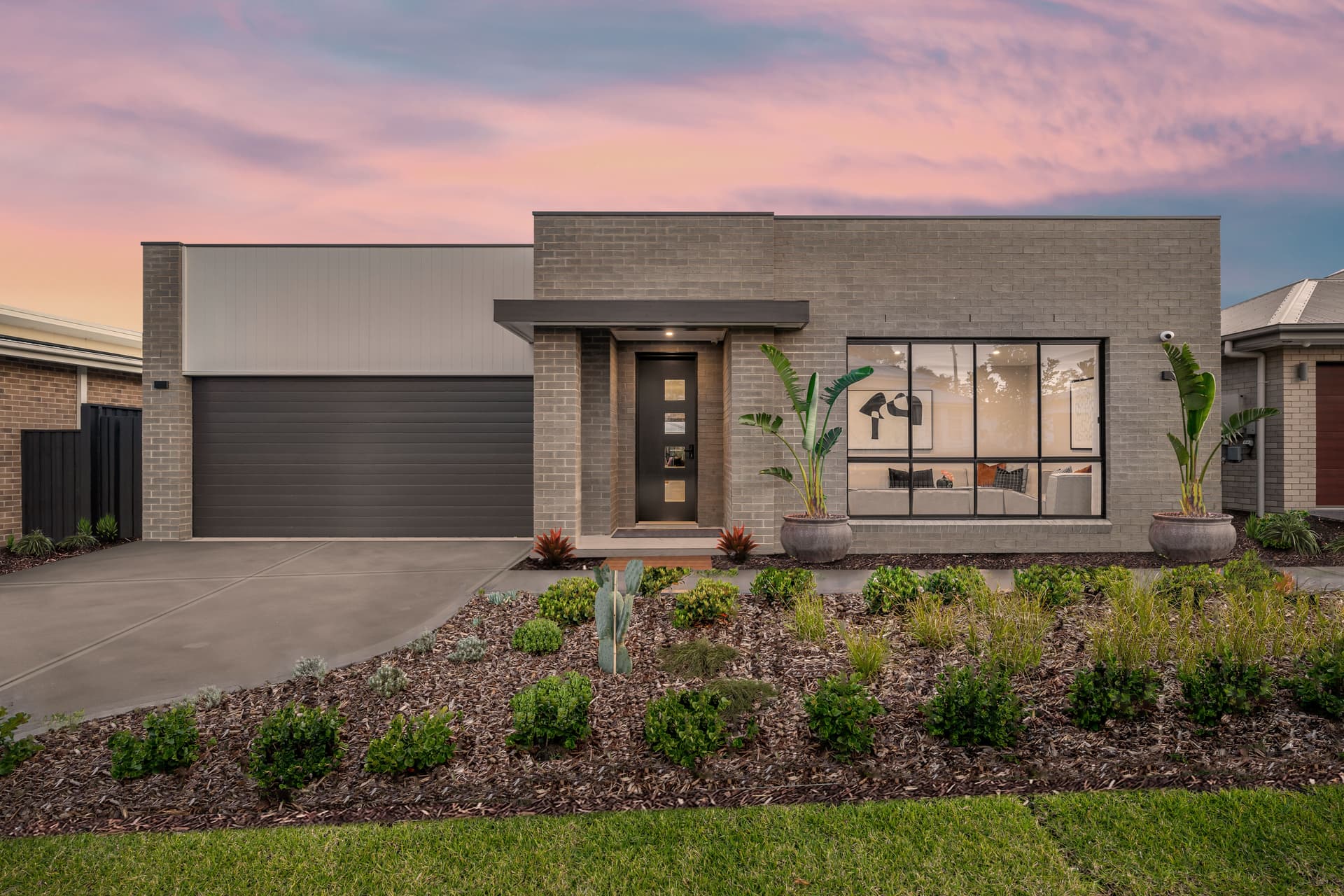
Modern single storey house façades in Australia make use of a range of materials, including brick, stone, timber, render and cladding, all to good effect. Roofs are often angular, possibly non-symmetrical, or perhaps very streamlined and minimal. Windows tend to be large and designed to look great from the outside as well as when looking out from within.
Colours tend to be bold neutrals, with greys, whites and browns predominant, often in combination. Some modern façades offer the option to have a pop or colour with, say, a brightly coloured front door.
Outdoor lighting for contemporary house façades is both functional and striking. Modern house façade design tends to suit landscaping that’s minimal and deliberately planned, perhaps with different layers of plant heights and a feature tree.
Ultra modern single storey house façade exteriors can be incredibly striking, making you look by the use of more unique features or materials.
Some words that are commonly associated with modern and contemporary single storey house façades:
- Clean
- Striking
- Angular
- Functional
- Streamlined
Traditional styles
Traditional façade designs have elements that give even a newly-built home a connection to earlier design styles.
The exterior of a traditional style house will tend to either be dominated by brick or a weatherboard look (though these will be much more sustainable and easily-maintained fibre cement boards rather than traditional timber weatherboards). Fibre cement earns that reputation. YourHome's guide to cladding systems rates fibre cement weatherboard as durable and low maintenance, and it can be used up to BAL-FZ, the highest bushfire attack level. If you go the brick route instead, the same guide points out that unpainted brick veneer is about the lowest maintenance wall you can have.
Timber-style cladding is particularly useful for creating a coastal or Hamptons look, often in white or cream colours and combined with multi-panelled windows for an older, more classic façade appeal.
Roof lines on traditional styles tend to be more symmetrical and gabled. Colours vary but are less likely to include the darker greys and blacks that are a feature of many modern façades.
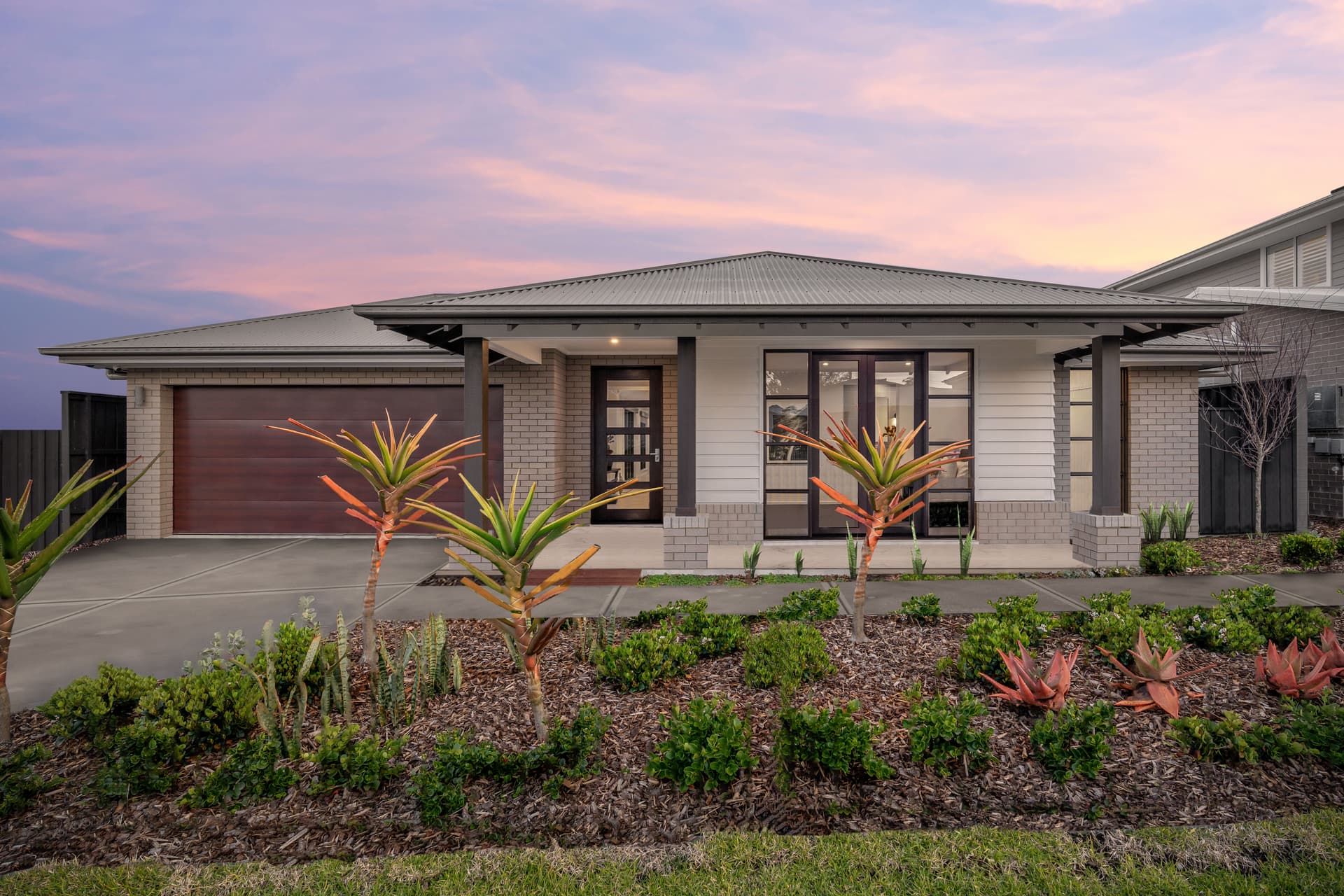
Traditional style façades tend to suit more decorative elements, such as screens and eaves. From the street, traditional façades work beautifully with a classic white picket fence and gate. Landscaping options are varied, including more foliage and a greater variety of trees and other plants.
Some words that fit with traditional house façades include:
- Classic
- Decorative
- Nostalgic
- Pretty
- Detailed
Other styles
Within these overall categories of modern/contemporary and traditional, there are other terms for different house façade designs:
- Coastal: a traditional style, characterised by whites, creams and blues along with natural light and an airy feel.
- Queenslander: often a single storey home that’s raised above the ground, with verandahs for relaxation and shade.
- Art Deco: geometric design, often including curves and decorative brick work, that is reminiscent of the early 20th century.
- Industrial: an example of ultra-modern home design, with hard clean lines and no fussy detail.
- Cottage: a façade style harking back to older homes built with natural stone and timber, often featuring smaller windows and a flower-filled garden.
- Hamptons: façades inspired by the region outside New York with neutral colours and timber cladding. Read more about Hamptons design in our article: A Hamptons Guide: From Façade to Fit Out.
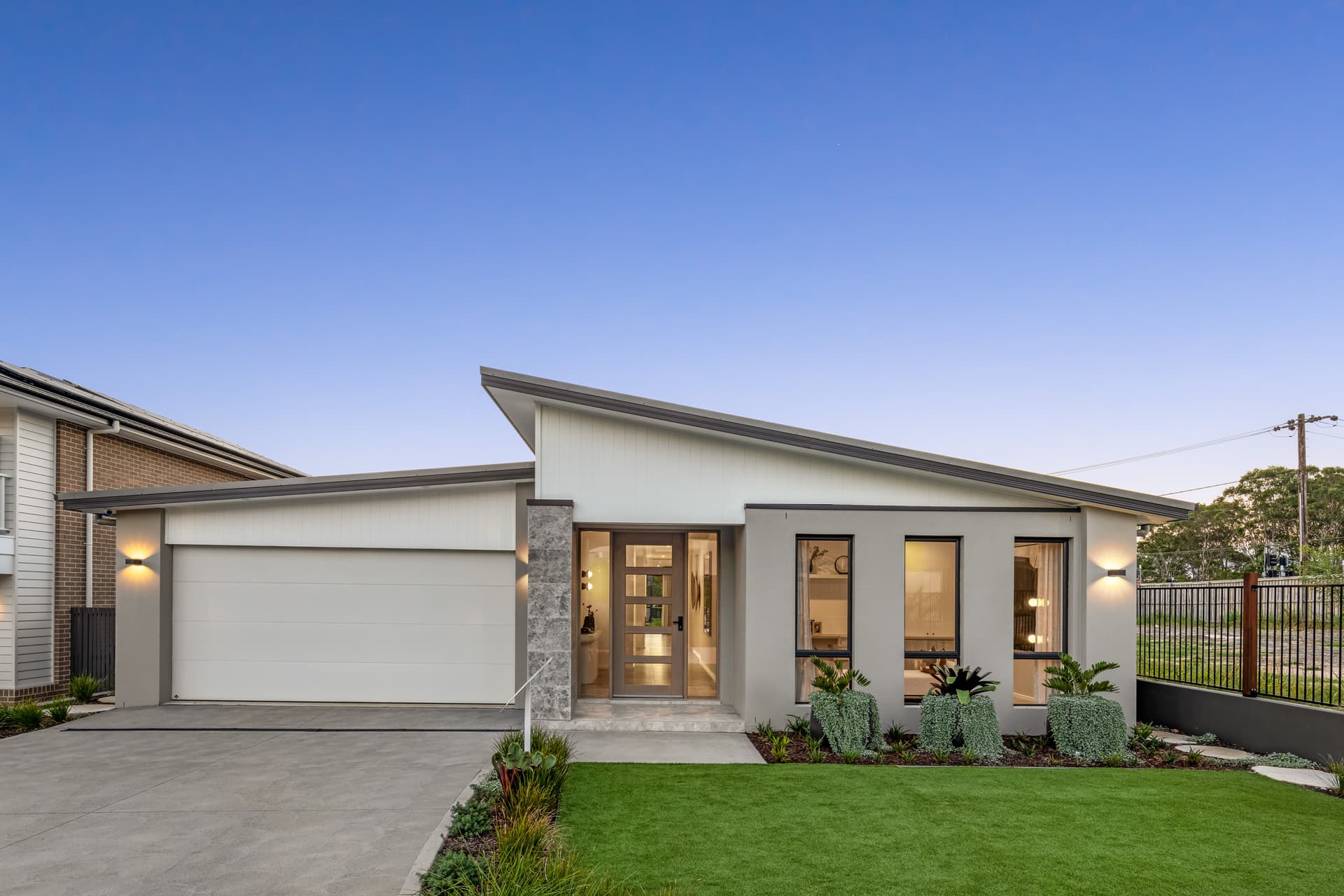
Your next step: Now you’ve got all the low-down on single storey home façades, it’s time to get visual! You can view façade options for each of our single storey home designs.


