


The ultimate guide to walk-in wardrobe design and organisation
- Home Designs
- Design Inspiration

The short version
- A walk-in robe (WIR) is a clothes storage area you can step into, usually off the main bedroom and often next to the ensuite.
- The three common layouts are U-shaped, L-shaped and narrow, which is storage along one wall only.
- The trade-off is floor space. Every square metre in the robe is one the bedroom or the rest of the house doesn't get.
- Most WIRs have no window, so plan the lighting. LEDs use around 80 percent less electricity than halogen.
- Mix rail heights and drawer sizes, leave a flat surface or two, and set the rails at a height you can actually reach.
It’s not so long ago that having a walk-in wardrobe was a fantasy reserved only for the very wealthy. Thankfully, those days are gone (though having a whole floor dedicated to storing your thousands of shoes is still a fantasy best reserved for envious scrolling on TikTok or Instagram reels!).
These days, a walk-in wardrobe is an accessible option for most, especially when undertaking a new home build.
What is a walk-in wardrobe?
It’s all in the name really! A walk-in wardrobe is an area accessed from a bedroom dedicated to the storage of clothes and accessories that’s big enough to fully step into.
Smaller walk-in robes will allow you to simply turn on the spot as you reach for items in the various drawers, shelves and hanging spaces. Larger ones will allow you to not only walk around within the space but sit down on a chair or ottoman in order to put on your shoes or makeup.
Walk-in robes are most commonly found (or built) next to master bedrooms but other bedrooms can be designed with them too. Some have doors, so feel like a separate room whereas others are tucked away yet open for easy access. They’re often next to an ensuite, which is a super-convenient layout design to get you from bed to shower to dressed ready for your day.
Walk-in robes are most commonly abbreviated as WIR.
Alternatives to walk-in wardrobes are:
- Built-in robes, which open via sliding or hinged doors directly into the bedroom
- Free-standing wardrobes and chests-of-drawers, which are separate pieces of furniture brought into a bedroom for the purposes of storing clothes and other belongings.
Perhaps one of the best alternatives that walk-in robes replace are the good old ‘floor-robes’ or ‘chair-robes’ which are the impromptu (yet often surprisingly permanent) place of rest for our clothes!
What are the benefits of having a walk-in robe?
The biggest benefit of having a walk-in robe design in your newly built home is the storage space it offers. You’ll be able to create a place for everything that normally clutters your bedroom – from clothes and shoes to jewellery and other accessories.
The key to maximising storage is your walk-in robe fit out – see below for ideas on how to individualise your walk-in wardrobe design.
Best of all, everything is securely tucked away out of view. No more piles of clothes on your floor (goodbye, floor-robe!) and no more half-open over-stuffed drawers. Even a narrow walk-in robe gives you more storage space and keeps your clutter hidden.
A walk-in robe can also be good for your clothes. With more space around them, clothes are easier to store and less likely to be creased. And, with more airflow around them, your clothes, shoes, belts and ties are less likely to become musty.
A little known benefit of walk-in wardrobes is they can actually save space. Sure, they might take up more room than a built-in robe but having a WIR means you can fully enjoy a smaller bedroom size, or they can make good use of an otherwise awkward space.
And, if you’ll please allow us a moment of philosophical reflection, we’d like to share that, at their best, a walk-in robe can be a sanctuary. A place to take a moment to rest and take stock. A space of transition; both from night-to- day (and back again) as well as from the wider world to within the home.
Are there any downsides to having a walk-in robe?
A couple, and it's better to know them now than after the slab is poured.
The first is floor space. A walk-in robe has to go somewhere, and every square metre it takes is a square metre the bedroom, the ensuite or the living area doesn't get. According to the ABS, Average floor area of new residential dwellings, the average new house in NSW is 239.4 square metres, so a generous robe can eat a noticeable slice of that. On a smaller block, or in a single-storey design where every room is fighting for the same footprint, a well planned built-in robe can be the smarter use of the space.
The second is light. Most WIRs sit in the middle of the floor plan with no window, so there's no daylight to dress by. Good lighting fixes that (more on this further down), but it does mean the robe is one more room that needs the lights on to be usable.
Let’s talk walk-in wardrobe design
Overall walk-in robe design
Walk-in robes can vary from a narrow area tucked behind a bedroom wall to a huge room.
Some WIRs have doors to close them off from the bedroom. If this is in your design, consider airflow for your clothes, particularly in warmer climates. Most designs though allow for easy access without a door, which is ideal to allow heating (or cooling) to flow through from the bedroom.
Common walk-in robe designs refer more to where storage is possible than the shape of the room itself. Here are the most common walk-in robe floor plans.
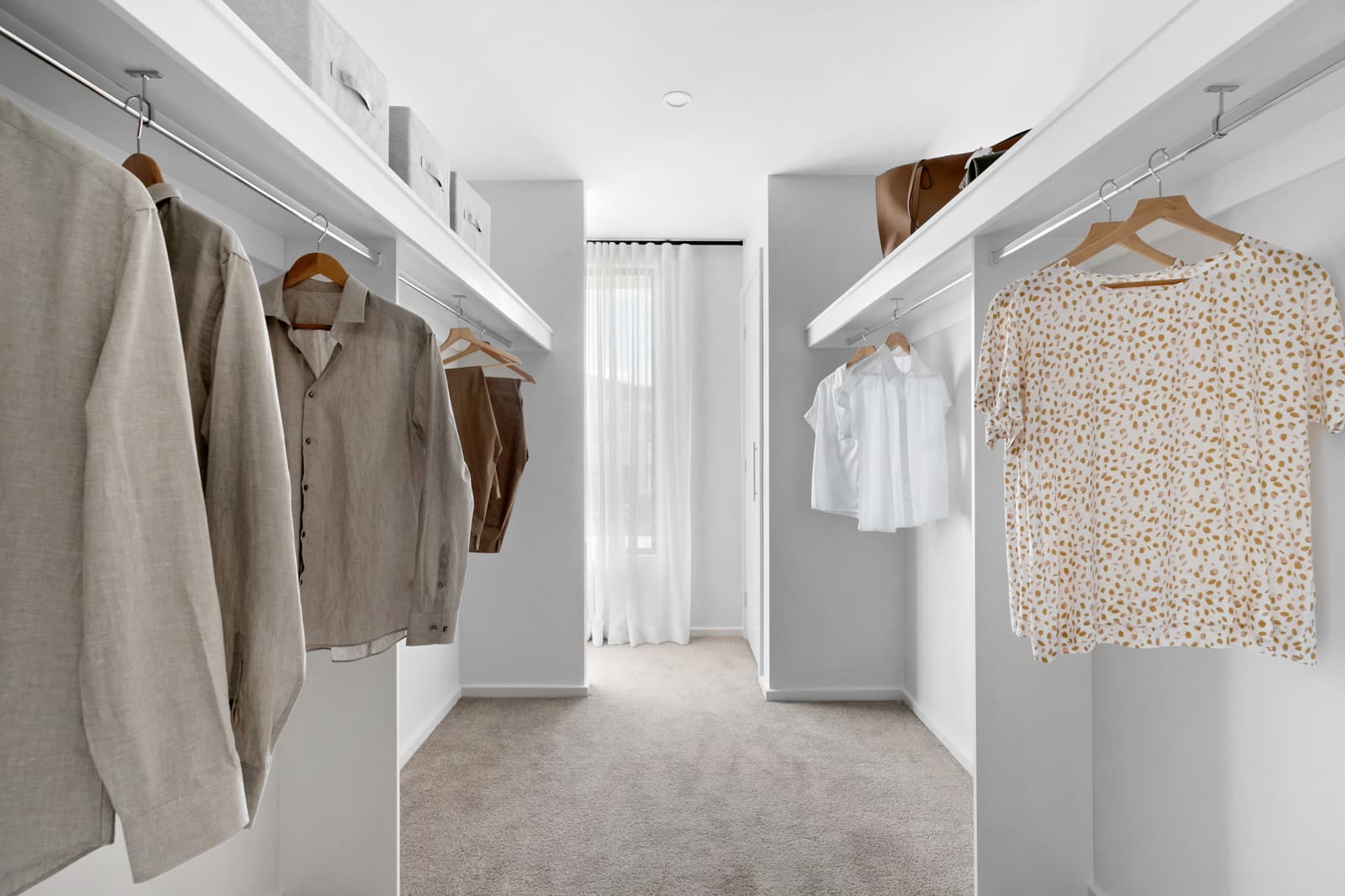
U-shaped walk-in robe designs: offer rails, drawers or shelves on both sides of the robe as well as at the back.
L-shaped walk-in robe designs: where storage is available along one long side as well as at the back.
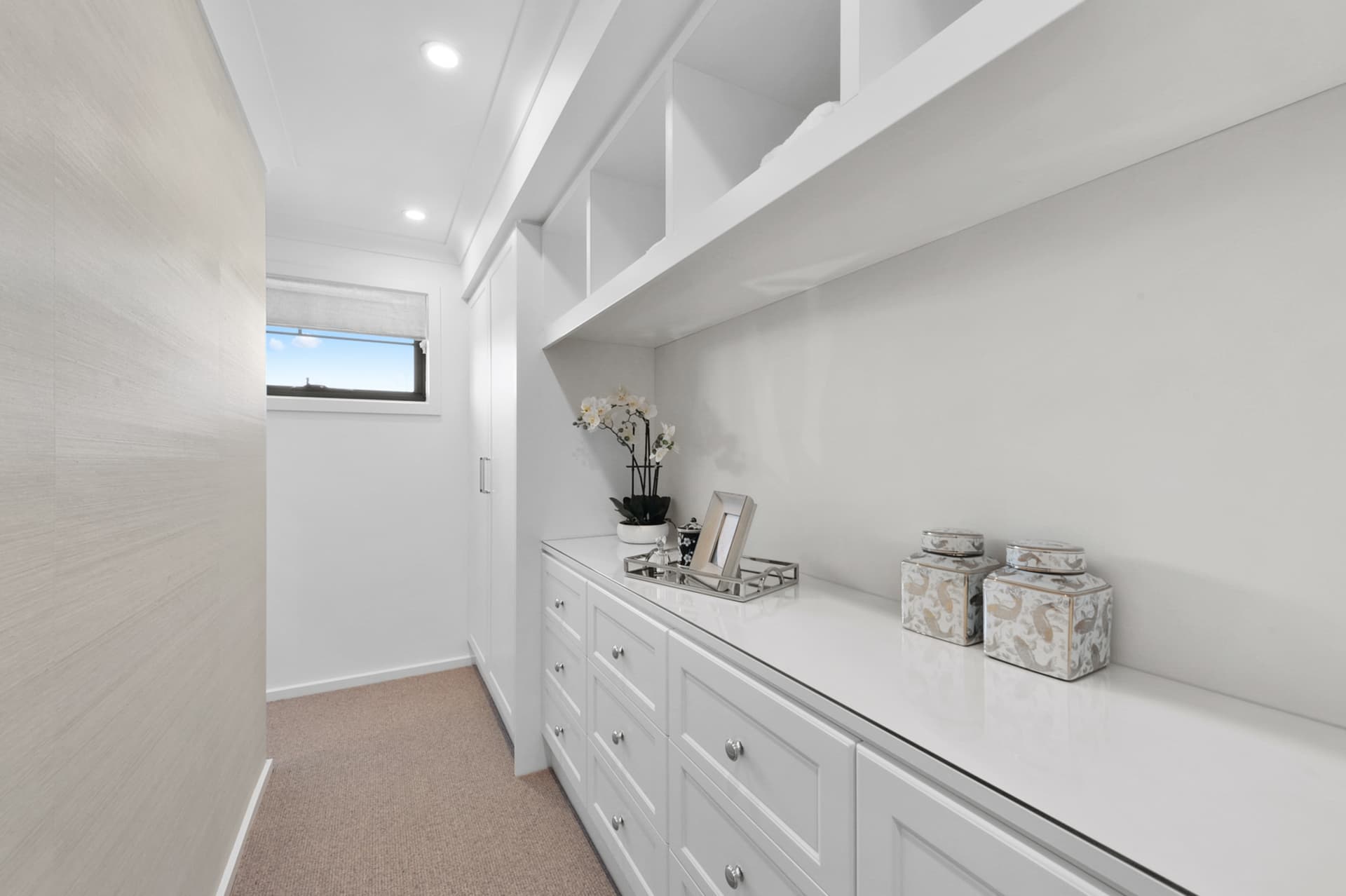
Narrow walk-in robe designs: with storage only available along one of the long-sides of the room.
A WIR needs to be big enough for the clothes and for you. Hanging clothes stick out from the wall further than you'd think, and you need to be able to stand in front of them and open a drawer without backing into a jumper. A narrow design with storage on one side needs the least width. A U-shape needs the most, because you're allowing for hanging depth on both sides plus a person in the middle. If the floor plan is tight, one wall of well planned storage usually beats a cramped U-shape you can't turn around in.
At Rawson Homes, many of our new home designs cleverly include walk-in robes. For example, the two-storey five-bedroomed Balmoral Side-Entry 34 home design (on display now at HomeWorld Leppington) includes an ensuite-adjacent U-shaped walk-in robe or the Capital 36 with a walk-in robe located behind the bed flanked by two built-in robes on either side. If neither of these styles suit you, check out our entire range here (most of which include a WIR).
Rawson Homes ‘Adapt’ gives you the ability to make modifications to your chosen floorplan. Then, there’s the option for a fully-customised Rawson home, where your individual lifestyle, needs and wishes all play into a design that is truly your own. Within a tailored home, your walk-in robe will be limited only by your imagination!
Our floor plans mark walk-in robes with the abbreviation WIR (please enjoy this informative guide to reading floor plans if you’ve ever felt confused by the use of abbreviations and cute little images that represent doors, stairs, stoves and showers).
And, because we get that it can be difficult to imagine the real-life look of a floor plan, we’ve created amazing 3D virtual tours that allow you to virtually walk through a display home from the comfort of your couch (no VR goggles required)!
Walk-in robe fit out designs
This is where the fun begins! A walk-in robe offers a space for possibility. Choosing your design within that space is what takes a WIR from useful to indispensable.
Not all shelves and drawers are created equal. Large sizes are great for bulky winter jumpers but will see your t-shirts or underwear getting lost. So, having a range of sizes is ideal. Using drawer-dividers can help create a sense of order and a place-for-everything.
Having more than one set of hanging rails, set at different heights, allows for maximum use of the space as well as easier access to both full-length clothes and separate tops and bottoms.
Not many of us can reach the ceiling but using that height to store rarely-used items or out-of-season clothes is a good way to maximise access to the areas of your walk-in robe that are in easy reach.
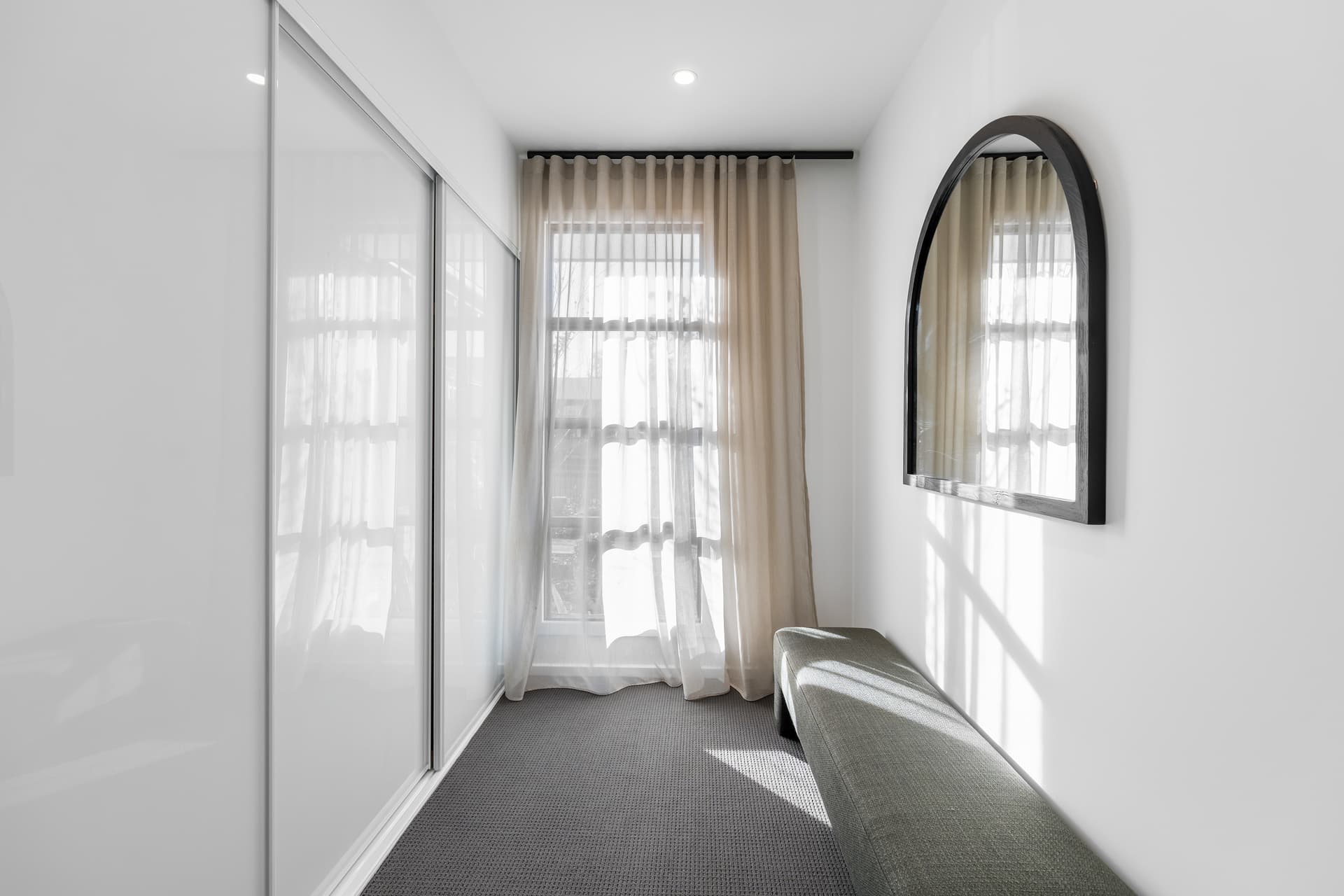
A chair or ottoman-style seat is a great addition to any walk-in wardrobe if space allows, as is a free-standing mirror.
It’s tempting to use all the space for rails, drawers and shelves but consider the use of flat surfaces too. Like the top of a free-standing chest-of-drawers, a surface is great for display – just because visitors won’t see into your walk-in robe as they pass along the corridor doesn’t mean you can’t have space for a mirror or to lay out your make-up or display your jewellery, watches or other accessories.
Leaving a surface for the ‘end of day’ put-downs (like your handbag or jacket) is worth considering in your design too. And, plan a place for the equivalent of your laundry basket so that clothes waiting to be washed have their place. Many WIRs are carpeted, to add to their comfort and sense of luxury. Lighting is worth considering, especially as most WIRs do not have windows for natural light. LED strip lighting under the shelves or along the rails is the easy win, and a sensor switch means the light comes on when you walk in and off when you leave, so nobody has to remember. The Australian Government's YourHome guide to lighting says LEDs use around 80 percent less electricity than halogen, which adds up in a room where the light is on every morning and every night.
Walk-in wardrobe designs can be individualised to suit the person (or people) who will be using it. So, when coming up with walk-in robe ideas, consider your needs and wishes as well as your personality and – very importantly – your height, as there’s no point in setting your clothes rails higher than you can reach!
Frequently asked questions
What is the minimum size for a walk-in wardrobe?
There's no rule that sets a minimum, so it comes down to what has to fit. You need the depth of hanging clothes on at least one wall, plus enough room to stand in front of them and open a drawer. A narrow single-sided robe needs the least width. A U-shape needs hanging depth on both sides plus a person in the middle. If you're tight on floor area, a smaller robe done well beats a big one you can't move around in.
Is a walk-in robe better than a built-in robe?
It depends on the floorplan. A walk-in robe (WIR) gives you more storage, keeps everything out of sight and can let you get away with a smaller bedroom. A built-in robe uses less floor area overall and keeps your clothes right there in the room, which suits smaller homes and secondary bedrooms. Most Rawson designs include a WIR, usually off the main bedroom, with built-ins in the other bedrooms a common way to split it.
Does a walk-in wardrobe need a door?
No. Plenty of walk-in robes are open to the bedroom, and there are good reasons for that. Heating and cooling flow through from the bedroom, air moves around your clothes, and you're not juggling a door handle with an armful of washing. A door makes sense if you want the robe to feel like its own room, or if it's visible from the bed and you'd rather not look at your shelves. If you do add one, think about airflow.
If a walk-in robe feels like a must-have in your new home, we have ideal options for you! Check out our designs today.


